Tokyo's Shiny New Buildings: Built by Old Men Who Think They Know What Young People Want
A local’s perspective on Omotesando’s construction boom
Written from Aoyama, Tokyo
The Building Boom Nobody Asked For
Walk around Omotesando these days, and you’ll see construction cranes everywhere. Grid Tower (opening February 2026), Harakado (opened April 2024), more projects in the pipeline. Every press release promises the same thing: “A new cultural hub for young people!”
But here’s what they don’t tell you: most of these buildings are empty.
I live in Aoyama, right next to Omotesando. I walk past these “cultural hubs” almost daily. And I can tell you—the reality is very different from the hype.
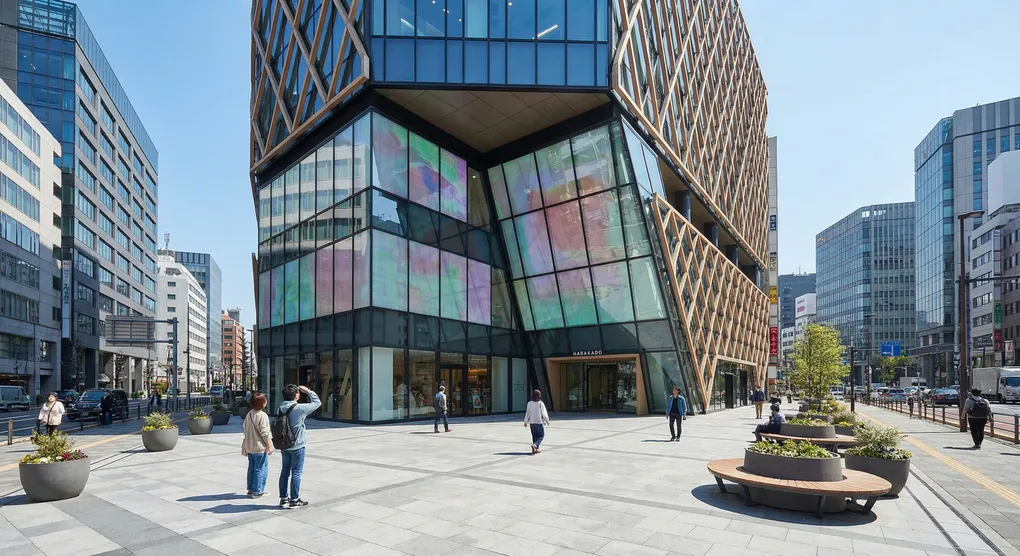
Case Study: Harakado’s Hollow Promise
Let me tell you about Harakado.
When it opened in April 2024, the marketing was intense:
- “New Harajuku culture creation space!”
- “75 cutting-edge stores!”
- “Projection mapping and digital art!”
- “The future of Tokyo youth culture!”
The building itself is impressive. 9 floors. A public bathhouse in the basement (520 yen, same as any Tokyo bathhouse). A magazine library. Rooftop garden. Green spaces everywhere.
But here’s the problem: whenever I go there, it’s practically empty.
Not “quiet.” Not “peaceful.” Empty. Like a mall nobody wants to visit.
The Disconnect: What Corporations Think vs. What People Want
Tokyo has a pattern. Developers and corporations keep building these “youth culture centers” designed in boardrooms by executives in their 50s and 60s.
They think:
- Young people want digital art!
- Young people want “experience spaces”!
- Young people want projection mapping!
But the projection mapping at Harakado feels dated. Like something that would’ve been cool in 2015. It’s the kind of thing that makes you think: “This was designed by someone who Googled ‘what do young people like’ and stopped at the first result.”
One business journalist who covered Harakado on TV called it “a rich person’s playground.” Another critic said it looked like “aristocrats playing with money.”
That’s exactly what it feels like.
The Problem: Corporate “Cool” Never Works
Here’s what these developers don’t understand:
Real culture emerges from the streets, not from planning meetings.
The best parts of Tokyo—Shimokitazawa’s tiny record shops, Nakameguro’s independent cafes, the random vintage stores in Koenji—they all happened organically. Nobody planned them. Nobody created a “cultural hub strategy deck” for them.
But corporations can’t resist the urge to manufacture culture. They want to create the next big thing, design the next trend, architect youth culture itself.
And it never works.
What About Grid Tower?
Grid Tower opens next month (February 2026). It’s Omotesando’s tallest building—160 meters, 38 floors. The marketing pitch:
- Soho House Tokyo (London’s exclusive members club, first time in Japan)
- Luxury condos with “unmatched views”
- Public green spaces covering 50% of the site
- “A new landmark for Omotesando”
Soho House is interesting. It’s genuinely prestigious internationally. But will it succeed in Tokyo?
I’m skeptical.
Because it follows the same pattern as Harakado:
- Big budget? Check.
- Celebrity architects? Check.
- Press releases about “creating culture”? Check.
- Understanding what people actually want? TBD.
The Real Test: Time
The thing about corporate-designed “cultural hubs” is that they look amazing on opening day. The press coverage is glowing. Instagram is full of photos.
But six months later? Empty.
Harakado is barely one year old, and it’s already quiet. Not in a peaceful, contemplative way. In a “this place failed to connect with people” way.
Will Grid Tower be different? Maybe. Soho House has a proven track record globally. The location is prime. The architecture looks stunning.
But I’ve learned to be skeptical of Tokyo’s endless parade of “the next big thing.”
A Local’s Take
As someone who lives in Aoyama and walks through this neighborhood every day, I’ve developed a simple rule:
If a building’s press release uses the phrase “cultural creation platform,” it’s probably going to be empty in a year.
The best culture in Tokyo doesn’t come from 160-meter towers or billion-yen developments. It comes from:
- The tiny ramen shop that’s been here for 40 years
- The independent bookstore run by one passionate owner
- The coffee stand where the barista actually remembers your order
You can’t design that. You can’t manufacture it. You can’t create it in a boardroom.
Grid Tower will open soon. I’ll probably visit out of curiosity. But I’m not holding my breath for it to become the “cultural hub” they’re promising.
Because in Tokyo, the buildings that actually matter are never the ones corporations planned.
Final Thoughts
Tokyo’s obsession with building “cultural hubs” reveals something deeper: a fundamental misunderstanding of how culture works.
Culture isn’t something you create with a budget and a construction timeline. It’s something that emerges when people gather, connect, and build something together over time.
Harakado tried to manufacture culture. It failed.
Grid Tower is trying the same thing.
Time will tell if Soho House’s global prestige can overcome Tokyo’s track record of beautiful, expensive, empty buildings.
But as someone who lives here and watches these towers go up year after year, I’m not optimistic.
About the Author:
I’m a Tokyo local living in Aoyama, one of the city’s most exclusive and trend-setting neighborhoods. I write about what’s actually happening in Tokyo—not what press releases say is happening.